A custom homebuilder CRM that puts Wormald Homes in control
Atlas is a custom sales CRM developed around the way Wormald Homes manages customers, communities, and sales. It brings customer history, community interests, inquiries, and sales reporting into one system, replacing Lasso as the sales team’s daily CRM.
Wormald Homes’ sales team helped define what Atlas needed to support. Their feedback shaped the interface and features and continues to guide updates.
- Project scope
- Branding, UX/UI, full-stack development, integrations, migration, deployment, and ongoing support.
- In daily use
- Atlas is now Wormald Homes’ daily CRM. The team can maintain projects, follow customers across communities, and guide improvements around its own priorities. The sales team has given positive feedback, and development continues.
How the system connects
New inquiries and the initial Lasso migration feed shared customer records. Atlas connects those records with the tools the team uses to follow up, understand sales activity, and keep the data useful.
When the CRM started getting in the way
Wormald Homes had been using Lasso, a CRM built for homebuilders.
Wormald Homes needed more control over its CRM: reports shaped around its priorities, stronger data-entry validation, and the ability to add projects and improve features on its own timeline.
One customer, a fuller picture
A homebuyer may explore several Wormald Homes communities before deciding where to buy. Atlas keeps those interests together, giving the sales team a fuller picture of the customer’s history, appointments, and activity across projects.
Project filters narrow the view while keeping the customer’s other associations visible.
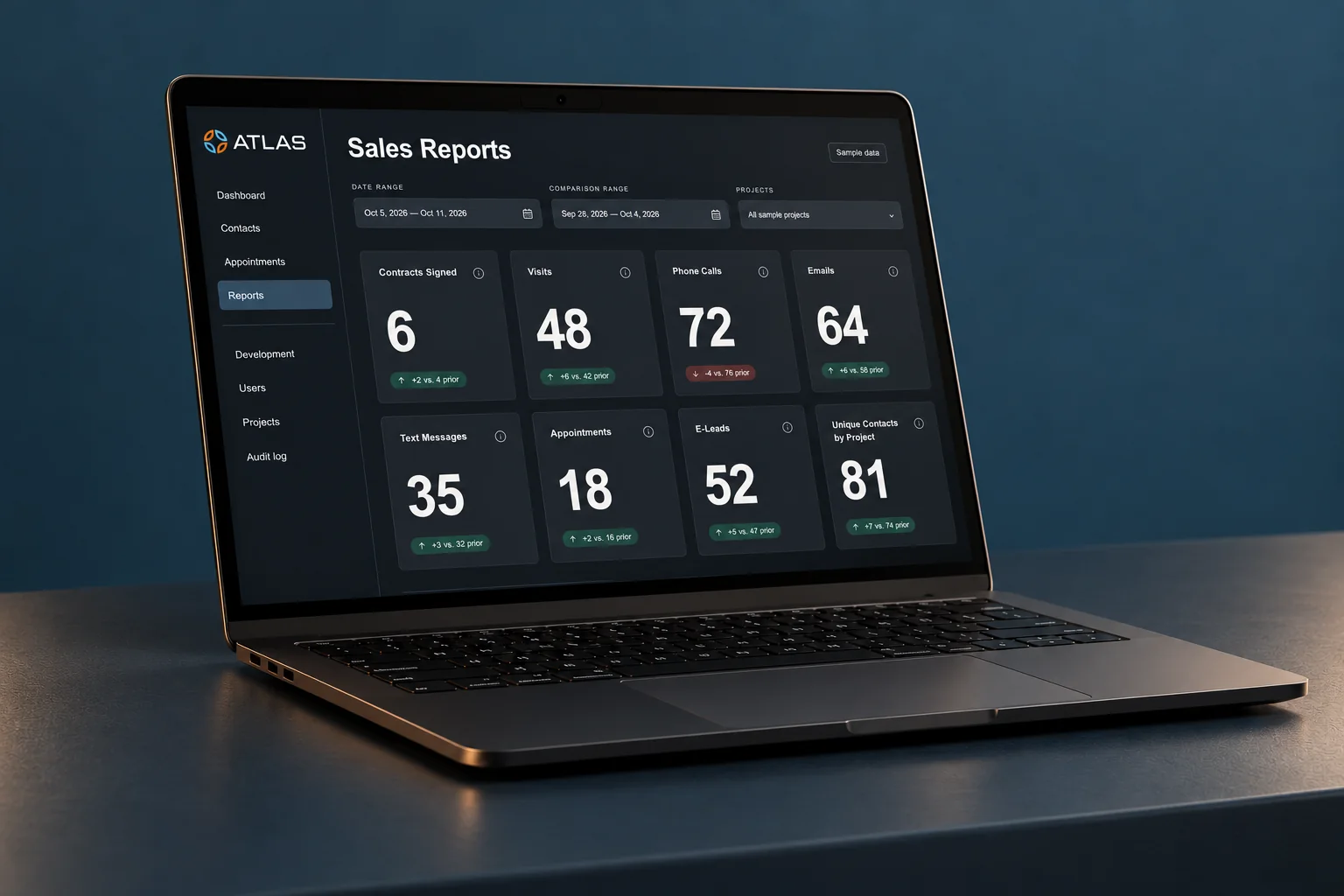
Sales reporting built around Wormald Homes’ questions
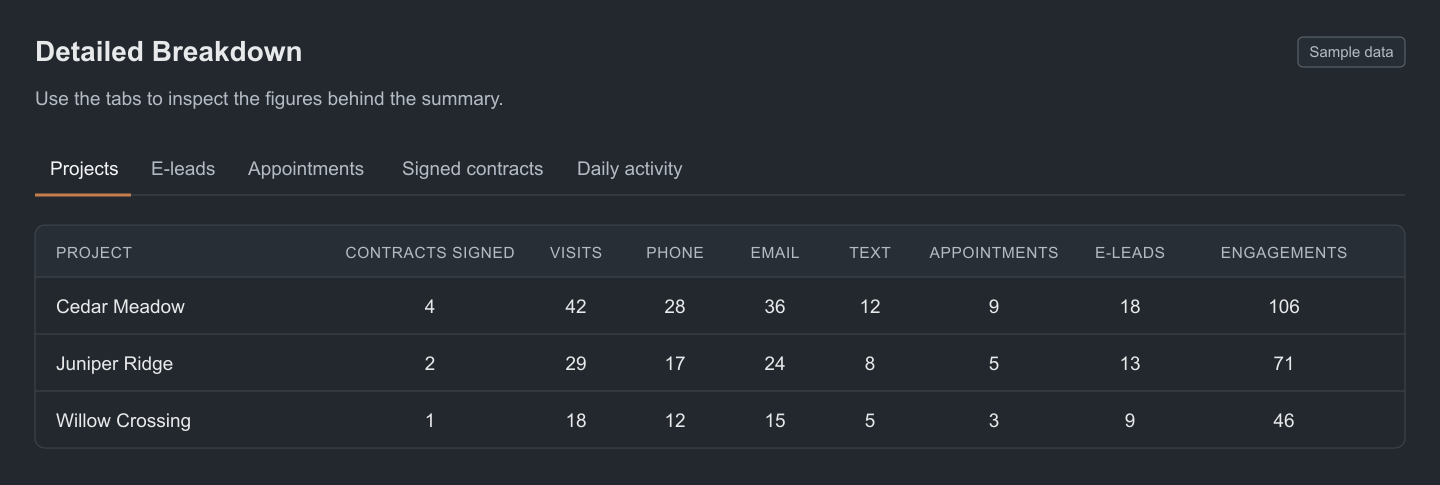
Reporting is now more accurate and focused on the activity and KPIs Wormald Homes uses: visits, calls, emails, text messages, appointments, online inquiries, and signed contracts. The team can filter by project and compare reporting periods.
A useful report starts with a clear definition of what counts. Atlas distinguishes repeat inquiries from unique contacts and lets the team compare activity across communities and reporting periods. Those details help make the numbers more meaningful.
Careful details, better data
A mistyped phone number can become tomorrow’s reporting problem. Atlas uses validation and duplicate checks to help catch issues during entry. The audit trail makes recurring problems easier to trace, so validation can improve over time.
Even a date field can make the job easier. Enter “Tomorrow @ 2:30PM,” and Atlas shows the exact date and time before the appointment is scheduled.

Connecting new inquiries to Atlas
Website inquiries and leads from Zillow, Realtor.com, and Homes.com flow into Atlas with source and community information, giving the sales team context for follow-up.


Migrating Lasso’s data was its own project
Moving away from Lasso also meant bringing the customer history along. Custom migration tools organized existing records, reconciled duplicates, and preserved relationships between customers, projects, appointments, and activity. Ambiguous records were flagged for review before migration.
A CRM that evolves with the sales team
The biggest improvement is control. Wormald Homes can add projects without a support ticket and guide feature development around its own priorities. Sales team feedback can turn directly into changes to the CRM.
Selected technologies
Next.js, React, TypeScript, and custom API integrations.
Need software that fits how your team works?
Let’s talk about what your software needs to do for your team.